



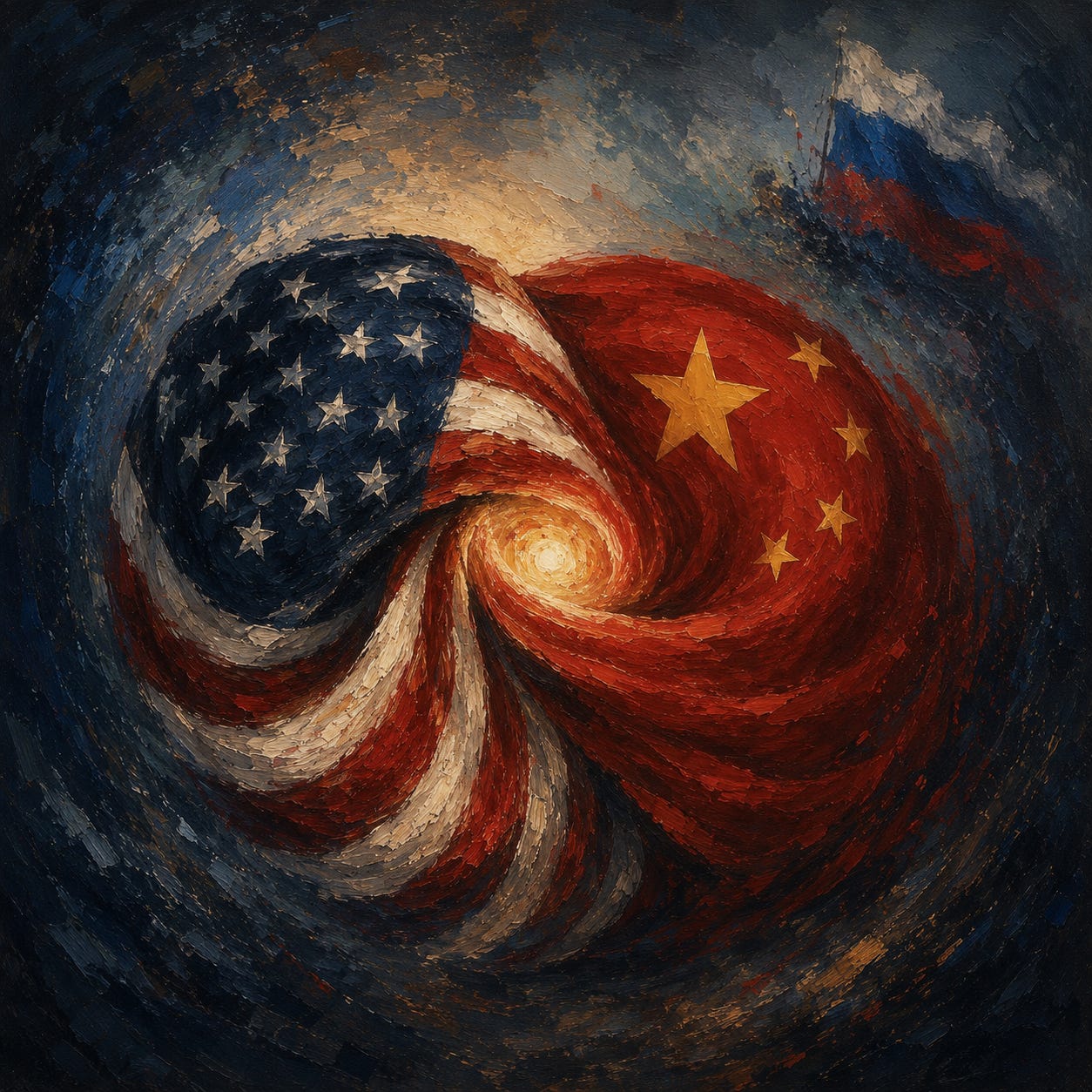
The Xi–Trump summit produced the photo-op everyone expected and the substance nobody can quite name. Headlines have oscillated between “thaw” and “theatre” — both wrong, in different ways. In an interview with ItalyPost’s Simone Matteis, Stefan Wolff answers the questions that matter most: what the summit actually changes, what it reveals about Russia’s slow demotion, the quiet US–China alignment on Iran, and the moment Europe finally runs out of excuses for not being a power of its own. Below, we provide an English-language version of the interview, lightly edited for style and readability.
1. Does the Xi–Trump summit mark a real turning point in US–China relations, or is it just a temporary tactical pause? Who is the real winner?
It is definitely not a turning point, and this was hardly to be expected: neither side has an interest in worsening relations at the moment — i.e., a negative turning point, implying a breakdown of the relationship — or the capacity to fundamentally reset relations towards full-on cooperation — i.e., a positive turning point, marking a greater alignment of strategic interests. I don’t think it’s merely a tactical pause either. It’s the continuation of a pattern in the relationship between Washington and Beijing that acknowledges certain boundaries and redlines (e.g., on Taiwan) and manages their deep economic interdependency by small mutual concessions and by creating new frameworks and processes (e.g., a Board of Trade and a Board of Investment) to kick the can of harder decisions further down the road. In that sense, they are both winners: Xi and Trump can each take some deals back home and look strong to domestic audiences without having given too much away.
2. If Washington and Beijing stabilise their relationship, is Vladimir Putin the real geopolitical loser of this shift?
